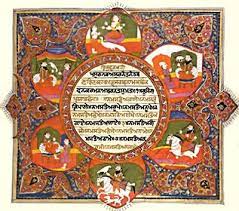
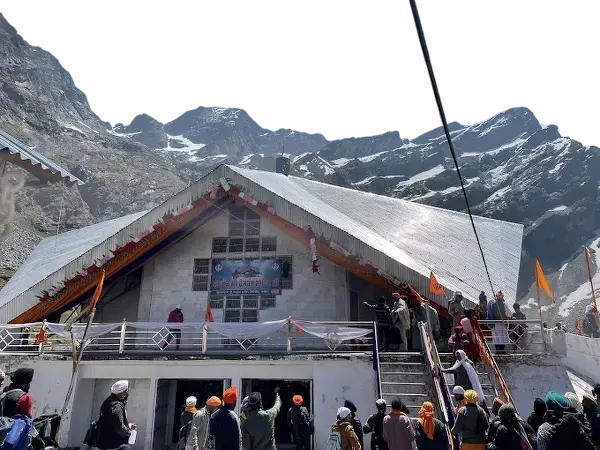
According to legend, when the goddess Durga sought refuge from marauding demons, a great ṛṣi fashioned a warrior—clad in a lion’s skin and armed with a sword—who vanquished evil and was blessed as “Duṣṭa-Dāman” (Suppressor of Evil). To deepen his spiritual power, Duṣṭa-Dāman then performed prolonged meditation at Hemkunt, a celestial seat of divine communion. Moved by his devotion, the Almighty promised to return him in Kaliyuga to uphold righteousness—fulfilling this vow when he was reborn as the son of Guru Tegh Bahadur.
The Tenth Guru Gobind Singh's
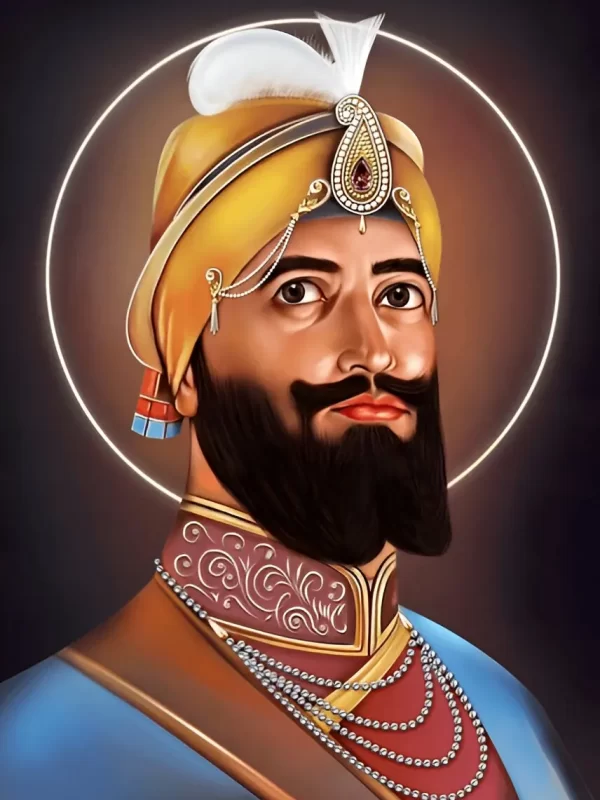
Born to uphold divine justice, the young Gobind Singh grew into a saintly warrior, uniting his followers in devotion to One Waheguru. Rooted in humility, selfless seva, and unwavering courage, he led the Khalsa with boundless faith and fearlessness in adversity.
TheDasam Granth
The Dasam Granth was compiled in 1734, the descriptions of Guru Gobind Singh’s tapasthan (place of meditation) – Hemkuntparbat Sapatsring- in the narrative ‘Bachitra Natak’ drew attention only after a century of its compilation. Kavi Santokh Singh, a mid- nineteenth century historian, was the first person to elaborate on the story of the creation of Dusht Daman and his place of meditation (the Guru’s tapasthan) in his fourteen volumes Sri Gur Partap Suraj (Parkash) Granth which was first published in 1843. In the late nineteenth century, Pandit Tara Singh Narotam – a Nirmala scholar and Sikh historian – compiled a descriptive collection of various Sikh tiraths (places considered holy because they are associated with Guru’s) which included Hemkunth.
Documenting & Rediscovering Hemkunt Sahib
Bhai Veer Singh
Bhai Veer Singh—a renowned Punjabi historian, reformer, and poet—brought together descriptions of Hemkunt Sahib from Guru Gobind Singh’s Bachitra Natak, Kavi Santokh Singh’s Suraj Prakash, and Pandit Tara Singh Narottam’s Sri Guru Tirath, publishing them as Sri Kalgidhar Chamatkar. Inspired by these accounts, retired Army granthi Sant Sohan Singh set out to locate the shrine referred to locally as “Lokpal.” Upon visiting, he found the terrain matched the sacred texts and was granted a profound vision, confirming this remote Himalayan lake as the very tapasthan of Guru Gobind Singh—Hemkunt Sahib.
Sant Sohan Singh
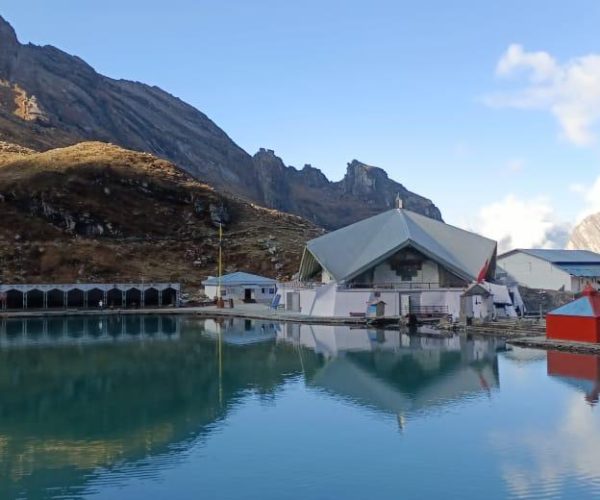
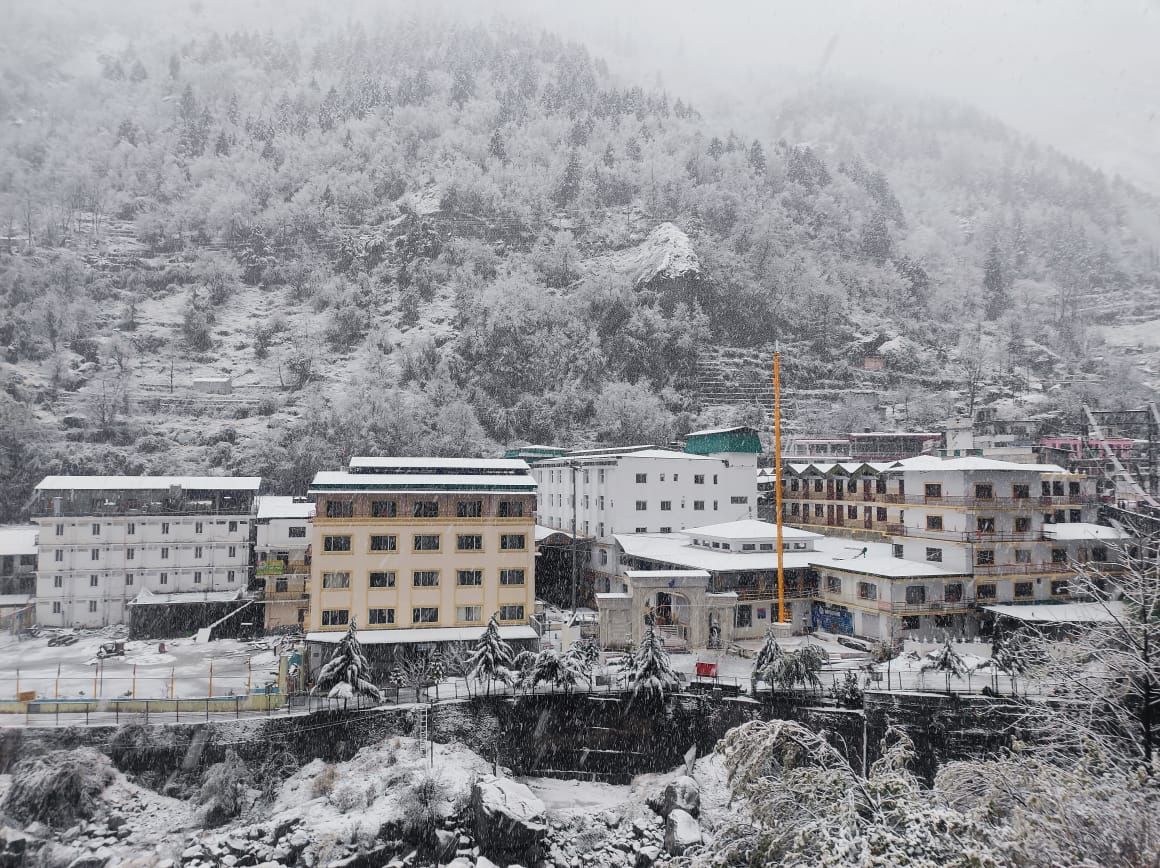
Emboldened by his discovery, Sant Sohan Singh—together with Bhai Veer Singh—resolved to erect a gurdwara on the holy shores of Hemkunt. They were joined by Havaldar Modan Singh of the Indian Army’s Survey Department, and in 1935 the trio ascended to the site to oversee construction. With local contractor Ganga Singh Bhandari at the helm—and the support of village chief Rattan Singh Chauhan, his son Nanda Singh Chauhan, and other residents—they completed a modest 10 × 10-foot shrine by November of that year. The consecration was sealed when Bhai Veer Singh presented a copy of the Guru Granth Sahib, establishing Hemkunt Sahib as the highest-altitude gurdwara in the world, forever marking Guru Gobind Singh’s tapasthan.
Havaldar Modan Singh
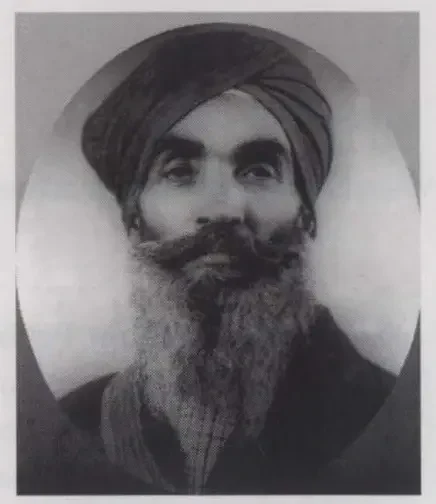
After the shrine’s founding, Sant Sohan Singh and Havaldar Modan Singh served Waheguru with unwavering devotion. Upon Sant Sohan Singh’s passing, Modan Singh assumed full stewardship of the Gurdwara. During his descents to Gobind Dham, he sheltered in a hollow tree—still standing in the courtyard and venerated by pilgrims—to withstand harsh weather and wildlife. Each winter, he regaled devotees on the plains with vivid tales of Hemkunt Sahib’s sanctity, inspiring early jathas, including one led by Master Karm Singh, to brave the unmarked, arduous trek to the high-altitude shrine.